
Southern Current Review
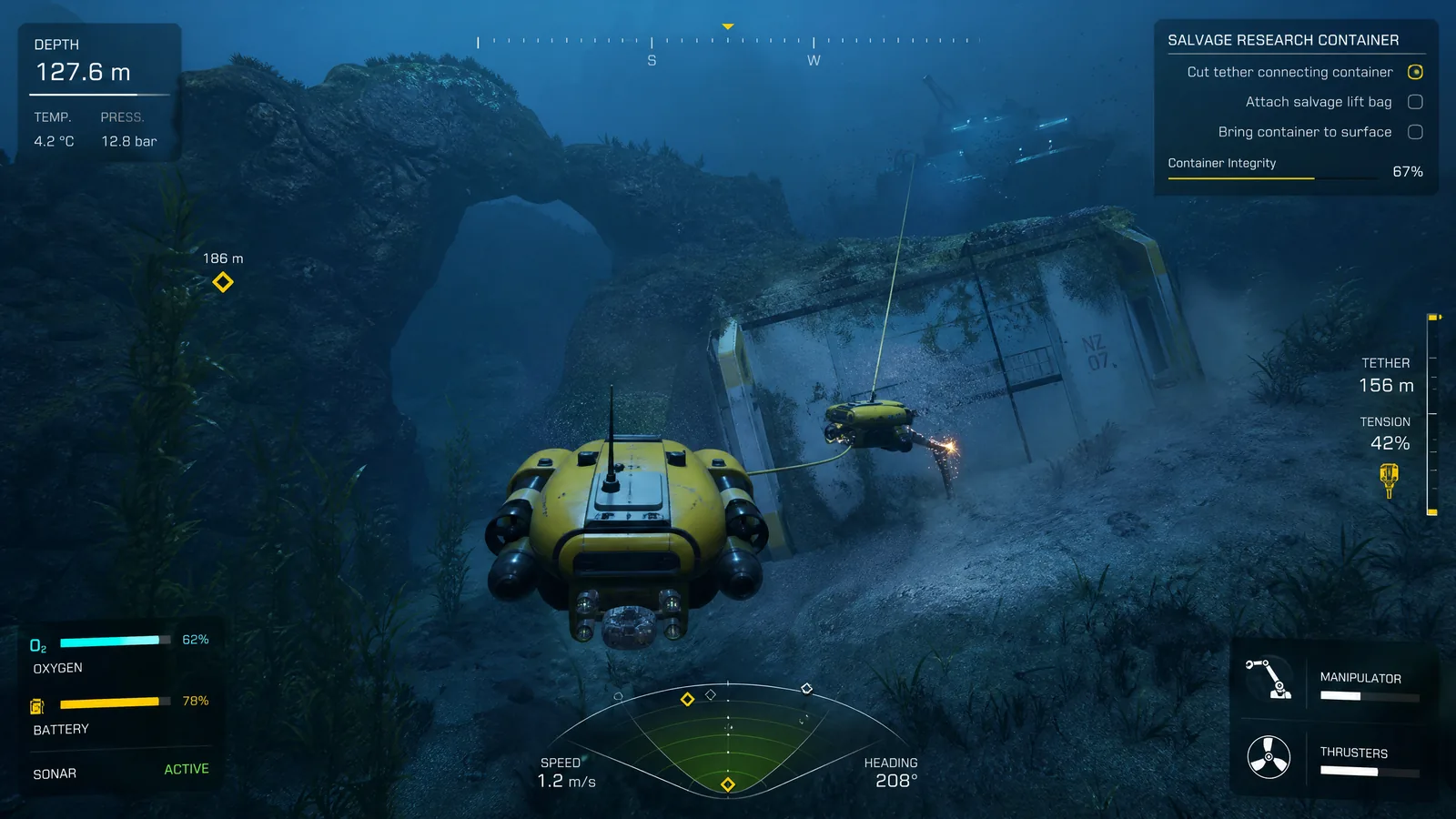
There is a profound, suffocating isolation that accompanies the descent into the abyssal zones of our oceans, a feeling that Southern Current captures with terrifying and brilliant precision. Positioned as a methodical underwater salvage simulation, this release tasks players with piloting a specialised submersible into the crushing depths to recover lost research containers and classified corporate assets. From the moment your vessel breaches the surface and begins its slow, ominous plunge into the dark, the game establishes a tone of unrelenting tension. It is not a game of fast-paced action or sudden jump scares; rather, it is a masterclass in atmospheric dread, where the primary antagonists are the physical limitations of your equipment, the crushing weight of the water above, and your own capacity for spatial reasoning under pressure. The central image of a lone player submersible, tethered to a delicate cutting drone while attempting to unearth a buried research container, perfectly encapsulates the delicate, high-stakes nature of the gameplay.
The core loop of Southern Current is divided into two distinct but equally vital phases: meticulous surface planning and the perilous execution of the dive itself. Before you even submerge, you must analyse the topographical data provided by your mothership and configure your vehicle's loadout. This preparation is paramount, as the game enforces a strict, uncompromising adherence to resource management. The holy trinity of your survival depends on balancing sonar capability, oxygen reserves, and battery life. Every piece of equipment draws from the same central power grid, meaning that every decision is a calculated trade-off. Do you equip a high-capacity oxygen scrubber to extend your dive time, or do you prioritise a heavy-duty battery bank to power your active sonar and cutting tools for longer periods? Misjudging this balance often leads to catastrophic failure.
Pressure and Precision
Once beneath the waves, the true genius of the game's mechanics reveals itself through the handling of the submersible. The developers have crafted a physics model that perfectly conveys the immense pressure and density of the deep ocean. Vehicle handling is intentionally sluggish, requiring players to anticipate momentum and counteract currents well in advance of any obstacle. Thrusters whine in protest as you attempt to navigate narrow ravines, and the sheer inertia of the craft means that reckless piloting will inevitably result in a hull-compromising collision. This weighty, deliberate movement model demands a level of patience and precision that is rarely seen in modern simulations, turning the simple act of positioning your craft over a buried research container into a tense manoeuvre.
The salvage operation itself introduces the game's most innovative and nerve-wracking mechanic: the remote cutting drone and its physical tether. Because the primary submersible is too large and unwieldy to perform delicate extraction work, players must deploy a smaller, highly manoeuvrable drone to cut through debris and attach recovery balloons to the target. However, this drone is permanently connected to the main vessel via a physical tether that is fully simulated within the game's physics engine. Managing this tether is an art form in itself. Allow it to go slack, and it risks tangling in jagged coral or the twisted metal of a shipwreck; pull it too taut, and you risk severing the connection entirely, losing an expensive piece of hardware and instantly failing the mission.
Resource management during these extractions is where Southern Current truly tests your nerve. The active sonar is your only reliable method for piercing the murky, particle-filled water to locate the exact position of the buried containers, but each ping consumes a significant portion of your battery. Relying too heavily on the sonar will leave you without the power necessary to operate the cutting drone's thermal lance. Conversely, attempting to operate in the dark using only your short-range floodlights is a terrifying prospect that often leads to disorientation and disaster. You are constantly weighing the need for information against the necessity of action, a dynamic that ensures no two dives ever feel routine.
The Economics of the Abyss
Progression in Southern Current is tied to a robust and deeply satisfying upgrade economy. Successfully extracting research containers yields substantial financial rewards, which must be reinvested into your vessel. The upgrade tree is extensive, offering meaningful improvements to hull integrity, battery efficiency, thruster output, and drone capabilities. What makes this system particularly engaging is that the upgrades do not simply make the game easier; rather, they allow you to dive deeper, stay longer, and tackle more complex salvage operations in increasingly hostile environments. Upgrading your hull to withstand the crushing pressure of the abyssal zone opens up entirely new biomes, each with its own unique hazards.
The sensory design of Southern Current is nothing short of extraordinary, transforming the deep ocean into a character that is simultaneously awe-inspiring and profoundly hostile.
The audiovisual presentation plays a crucial role in maintaining the game's oppressive atmosphere. The sound design is phenomenal, characterised by the constant, rhythmic breathing of your character, the metallic groans of the submersible's hull as it descends into higher pressure zones, and the muffled, eerie sounds of the deep ocean. Visually, the game utilises lighting and particle effects to create a palpable sense of depth and density. The way your floodlights catch the drifting marine snow, or the terrifying manner in which massive underwater structures loom out of the impenetrable darkness, is consistently breathtaking. Performance on both PC and current-generation consoles is largely excellent, with smooth frame rates that are essential for the precise vehicle handling required.
A Deeply Rewarding Dive
Despite its many strengths, Southern Current is not without its limitations. The intentionally slow pacing and methodical nature of the gameplay will undoubtedly alienate players looking for immediate gratification or fast-paced exploration. The learning curve is exceptionally steep, and the game is unforgiving of mistakes; a single miscalculation regarding battery life or tether management can result in the loss of hours of progress. Furthermore, while the core salvage loop is highly polished, the variety of mission types can begin to feel slightly repetitive during extended play sessions, as the fundamental mechanics of locating, cutting, and extracting remain largely unchanged throughout the campaign.
However, for those who appreciate deliberate, systems-driven gameplay, these limitations are minor blemishes on an otherwise exceptional experience. The game demands your full attention, rewarding patience, spatial awareness, and careful planning with a sense of accomplishment that few other titles can match. The tension of watching your battery gauge slowly deplete while you desperately try to free a snagged tether in the pitch black of the ocean floor is a uniquely thrilling experience.
Ultimately, Southern Current stands as a monumental achievement in the simulation genre, offering a gripping, highly atmospheric, and intellectually stimulating take on underwater salvage. It successfully translates the terrifying reality of deep-sea exploration into a compelling mechanical loop, forcing players to respect the ocean and the delicate machinery required to survive it. Earning a well-deserved 8.8/10, it is a definitive recommendation for fans of methodical simulators and atmospheric thrillers alike, providing a deep, dark, and utterly absorbing journey into the abyss.